The basics: what each type includes
In the UK, eye care is delivered through a mixed system where both the National Health Service and private providers play important roles. Understanding the differences between NHS and private eye tests helps you make an informed choice about which option best suits your needs, budget, and visual requirements.
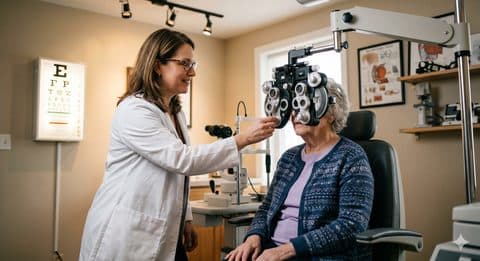
An NHS eye test is a comprehensive examination carried out by a qualified optometrist and funded by the government for eligible patients. It covers all the essential clinical checks needed to assess your vision and eye health, including a visual acuity assessment, refraction to determine your prescription, examination of the front and back of your eyes, an eye pressure check, and screening for conditions such as glaucoma, cataracts, and macular degeneration. The NHS eye test is designed to meet the clinical standards set by the College of Optometrists and provides a thorough evaluation that is perfectly adequate for the vast majority of patients.
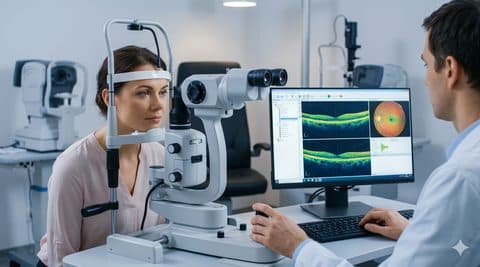
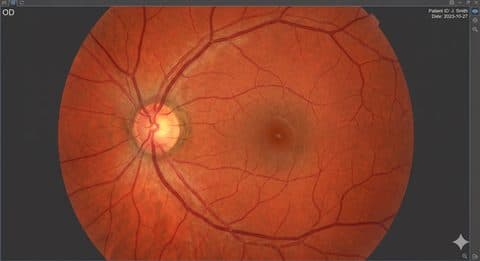
A private eye test includes everything in the NHS test but may also incorporate additional assessments and technologies. These extras can include optical coherence tomography (OCT), which creates detailed cross-sectional images of the retina and can detect conditions at an earlier stage than standard examination alone; digital retinal photography, which captures a permanent baseline image for future comparison; corneal topography, which maps the surface curvature of the eye; tear film analysis for dry eye assessment; and more detailed binocular vision testing. The specific additional tests offered vary from practice to practice.
Who qualifies for a free NHS eye test?
Not everyone is entitled to a free NHS-funded eye test. In England, eligibility is based on age, medical conditions, family history, and financial circumstances. You qualify for a free NHS eye test if you meet any of the following criteria.
You are under 16 years of age, or under 19 and in full-time education. You are aged 60 or over. You have been diagnosed with diabetes or glaucoma. You are considered at risk of glaucoma because a parent, sibling, or child has been diagnosed with the condition, and you are aged 40 or over. You are registered as sight-impaired or severely sight-impaired (partially sighted or blind). You are a prisoner on release from prison. You need complex lenses and have a valid NHS complex lens voucher. You receive certain qualifying benefits, including Income Support, income-based Jobseeker's Allowance, income-related Employment and Support Allowance, Pension Credit Guarantee Credit, or Universal Credit that meets the criteria. You are named on a valid NHS tax credit exemption certificate, or you are entitled to or named on a valid NHS certificate for full help with health costs (HC2).
In Scotland, the situation is simpler: every resident is entitled to a free NHS eye test, regardless of age, medical history, or income. This universal provision was introduced in 2006 and has been credited with increasing uptake of eye care, particularly among groups who were previously less likely to attend. In Wales, free NHS eye tests are available to everyone, following a similar universal model to Scotland. In Northern Ireland, free eye tests are available to eligible groups including children, over-60s, people with diabetes or glaucoma, and those on qualifying benefits.
Cost comparison
An NHS-funded eye test costs you nothing if you are eligible. The government pays the optometrist a fixed fee for each NHS eye test they conduct, and you simply attend, have your examination, and receive your prescription without any out-of-pocket expense. If you are not eligible for a free NHS test, you will need to pay privately, and in this case, the cost is set by the individual practice rather than by the NHS.
The cost of a private eye test in the UK typically ranges from around twenty pounds to forty pounds for a standard examination, depending on the optician, location, and what is included. Some high-street chains offer eye tests at the lower end of this range, while independent practices and those offering enhanced testing may charge more. If your private eye test includes additional technology such as OCT scanning, you can expect to pay between forty and sixty pounds in total, though some practices include OCT as standard while others offer it as an optional add-on.
It is worth noting that many opticians offer promotional pricing on eye tests, particularly if you are a new patient or if you purchase glasses at the same practice. Some optical insurance plans and corporate benefits packages also include eye tests, so check whether your employer offers any optical benefits before paying out of pocket.
What you get with an NHS eye test
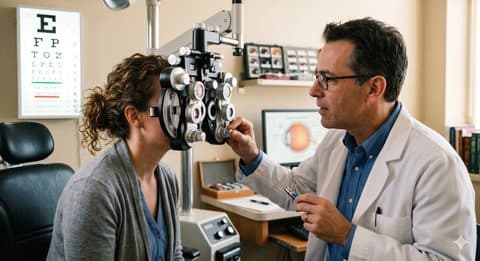
The NHS eye test is a clinically thorough examination that covers all the essential components of an eye health check. Your optometrist will assess your visual acuity, carry out a refraction to determine whether you need glasses and what your prescription should be, examine the health of your eyes using a slit lamp and ophthalmoscope, check your eye pressure, and screen for signs of disease.
The quality of the clinical examination itself is the same whether you are having an NHS or private eye test, because the same professional standards and guidelines apply to both. Your optometrist is a registered healthcare professional with the same training, qualifications, and obligations of care regardless of how the test is funded. If they detect anything concerning, they will refer you to the Hospital Eye Service through the same pathway, whether your test was NHS or private.
Where the NHS eye test may differ from a private test is in the time allocated and the additional technology available. NHS eye tests are typically scheduled in 20 to 25 minute slots, which is sufficient for a comprehensive standard examination but may feel rushed in some practices. The optometrist is reimbursed at a fixed rate by the NHS, which means they need to work efficiently to maintain a viable practice. This does not mean that the quality of care is compromised, but it does mean that there may be less time for extended discussion or additional testing that goes beyond the core clinical requirements.
What you get with a private eye test
Private eye tests give the optometrist more flexibility in terms of time and technology. Appointments may be longer, typically 30 to 45 minutes, allowing for a more relaxed pace and more detailed discussion of your results, lifestyle needs, and any concerns you may have. This extra time can be particularly valuable for patients with complex needs, those with multiple risk factors, or anyone who simply wants a more thorough and unhurried experience.
The most significant difference between NHS and private eye tests is often the inclusion of advanced diagnostic technology. Optical coherence tomography is the standout example. This non-invasive imaging technique uses light waves to create highly detailed cross-sectional images of the retina, revealing the individual layers of tissue in a way that is not possible with standard examination techniques. OCT can detect the earliest signs of conditions such as macular degeneration, glaucoma, and diabetic eye disease, sometimes years before they would be visible through conventional examination.
Digital retinal photography is another common addition in private eye tests. A high-resolution photograph of the back of your eye is captured and stored, creating a permanent baseline record that can be compared with images taken at future visits. This makes it easier to detect subtle changes over time, even if different optometrists examine you on different occasions. Both OCT and retinal photography are painless, quick, and non-invasive.
Some private practices also offer additional testing such as corneal topography, which is particularly useful for contact lens fitting and monitoring conditions like keratoconus; tear film assessment using technologies like Tearlab or the Oculus Keratograph, which can provide objective measurements of dry eye severity; and more detailed assessments of binocular vision and visual processing for patients with reading difficulties or visual discomfort.
Which should you choose?
The right choice depends on your individual circumstances, and there is no single correct answer that applies to everyone. If you are eligible for a free NHS eye test and have no specific concerns or risk factors beyond normal age-related changes, the NHS test provides an excellent standard of care at no cost. It covers everything you need clinically, and your optometrist will refer you for further investigation if anything concerning is found.
If you are over 40, have a family history of eye disease, have diabetes or other systemic conditions that can affect the eyes, or simply want the most comprehensive examination available, a private eye test with OCT and retinal imaging offers additional reassurance and earlier detection capabilities. The extra cost of twenty to forty pounds for these additional tests is relatively modest, and many patients consider it money well spent for the peace of mind it provides.
You might also consider a hybrid approach: attend for your free NHS eye test every two years to fulfil the core clinical requirements, and add on private OCT scanning when available at your practice. Some opticians offer this as a straightforward add-on to the NHS test, typically for an additional fifteen to thirty pounds, giving you the best of both worlds.
Quality and regulation
Both NHS and private eye tests are delivered by the same professionals. Optometrists in the UK must be registered with the General Optical Council (GOC), which sets standards of practice, oversees professional conduct, and ensures that all registered practitioners maintain their clinical skills through mandatory continuing education and training. Whether you see an optometrist in a large high-street chain, a small independent practice, or a specialist clinic, they have all completed the same rigorous four-year degree programme followed by a pre-registration year of supervised practice.
The premises in which eye tests are carried out are also subject to regulation. Optical practices must comply with health and safety standards, maintain their equipment, and follow infection control protocols. The GOC has the power to investigate complaints and take action against any optometrist or practice that falls below the expected standards, regardless of whether they provide NHS or private services.
This means that you can be confident in the quality of your eye test wherever you choose to have it done. The decision between NHS and private is not about the competence of the person examining you; it is about the breadth of testing, the technology used, the time available, and your own preferences and budget. Both options deliver excellent eye care, and the most important thing is that you have your eyes tested regularly, whichever route you choose.
Making your decision
To summarise, if you are eligible for a free NHS eye test, it provides a thorough, clinically sound examination that is more than adequate for most people. If you want additional technology, more time, or enhanced screening capabilities, a private eye test offers these extras for a relatively modest outlay. And if you are not sure which to choose, speak to your optician, as most practices offer both NHS and private services and can help you decide which option is most appropriate for your needs.
Whatever you decide, the most important thing is to have your eyes tested regularly. Whether NHS or private, a comprehensive eye test is one of the most valuable health checks available in the UK, providing vital information about both your vision and your general health. Use our search tool to find opticians near you, compare their services, and book an appointment today.