Before your appointment
Preparing for an eye test is straightforward, but a little advance thought can help your optometrist get the most accurate results. If you currently wear glasses or contact lenses, bring them along to your appointment, including any reading glasses, distance glasses, and sunglasses with prescription lenses. Your optician will want to check your current prescription and assess whether it still meets your needs.
Make a mental note of any vision changes you have noticed since your last eye test. Have you been experiencing headaches, difficulty reading small print, eye strain after screen use, or any episodes of blurry or double vision? Have you noticed floaters, flashing lights, or any areas of your vision that seem darker or missing? These observations, no matter how minor they seem, provide valuable diagnostic clues and should be mentioned during your consultation.
It is also helpful to know your family eye health history. Conditions such as glaucoma, macular degeneration, and high myopia can run in families, and your optometrist will want to assess your risk level based on your genetic background. If you are taking any medications, including over-the-counter supplements, bring a list or the packaging, as some drugs can affect your vision or the health of your eyes. You should also bring your NHS exemption certificate, benefits paperwork, or medical card if you are entitled to a free eye test or optical voucher.
Step 1: The history and symptoms discussion
Every eye test begins with a conversation. Your optometrist will ask about your general health, any medications you are taking, your occupation and daily visual demands, and any specific concerns or symptoms you have been experiencing. This is not just polite small talk; it is a critical part of the diagnostic process. The information you provide helps your optometrist tailor the examination to your individual needs and ensures they are looking for the right things.
You will also be asked about your family medical history, particularly any relatives who have been diagnosed with eye conditions such as glaucoma, cataracts, or macular degeneration. Be as honest and thorough as possible during this discussion. If you spend long hours at a computer, drive frequently at night, or do detailed close work for your job or hobbies, mention this, as it will influence the advice and prescription your optometrist provides.
This initial conversation typically takes around five minutes and sets the tone for the rest of the examination. A good optometrist will make you feel comfortable and encourage you to ask questions at any point during the test.
Step 2: Visual acuity testing
The visual acuity test is the part of an eye examination that most people recognise. You will be asked to read letters or symbols from a chart, typically positioned at a distance of six metres or reflected using a mirror system. Each eye is tested separately, and you will read progressively smaller lines until you can no longer distinguish the characters clearly.
Your optometrist will record your visual acuity using a standardised notation. In the UK, this is usually expressed as a fraction such as 6/6, which means you can see at six metres what a person with normal vision should be able to see at six metres. A result of 6/12 means you need to be at six metres to see what someone with standard vision could see from twelve metres away.
If your visual acuity is not 6/6, it does not necessarily mean there is a problem. Many people have mild refractive errors that can be easily corrected with glasses or contact lenses. The visual acuity test simply establishes a baseline and helps your optometrist determine whether further investigation or correction is needed.
Step 3: Refraction — finding your prescription
Refraction is the process of determining the exact lens power needed to correct your vision. Your optometrist will use a combination of techniques, starting with an autorefractor, a machine that shines a beam of light into your eye and measures how it bounces back from the retina. This gives an objective starting point for your prescription.
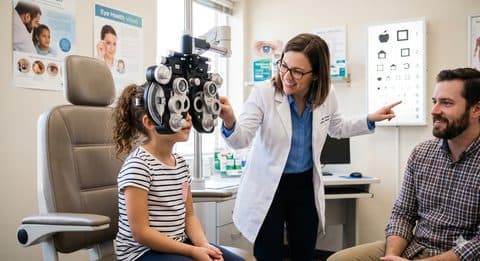
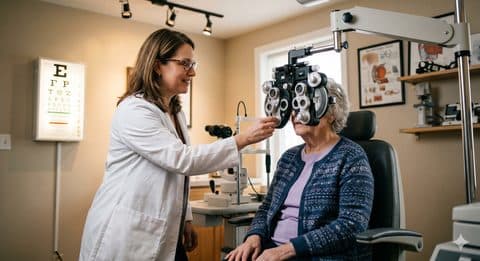
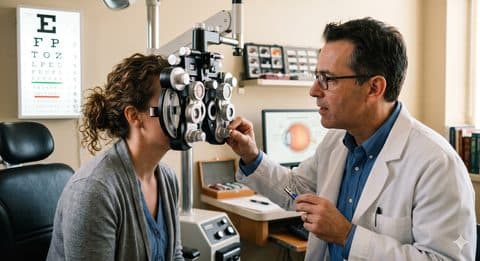
Next comes the subjective refraction, where your optometrist fine-tunes the prescription using a phoropter or trial frame. You will look through a series of lenses and be asked which option makes the letters on the chart clearer. This is the classic "which is better, one or two?" part of the eye test. Do not worry if the choices seem very similar or if you feel unsure; your optometrist is trained to interpret your responses, and small hesitations are entirely normal and expected.
The refraction determines three key values for each eye: the sphere (the main lens power for short-sightedness or long-sightedness), the cylinder and axis (which correct for astigmatism, an uneven curvature of the cornea), and, for those over 40, an addition power for reading. These values make up your optical prescription, which you are legally entitled to receive at the end of your eye test.
Step 4: Eye health examination
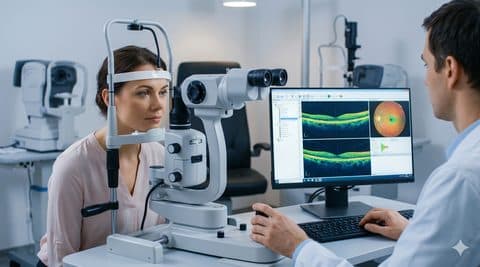
Beyond checking your prescription, a comprehensive eye test includes a thorough examination of the health of your eyes, both inside and out. Your optometrist will use a slit lamp, a powerful binocular microscope combined with a bright, focused light, to examine the front structures of your eye. This includes the eyelids, eyelashes, conjunctiva, cornea, iris, and lens. The slit lamp can detect conditions such as dry eye, conjunctivitis, corneal abrasions, cataracts, and inflammation.
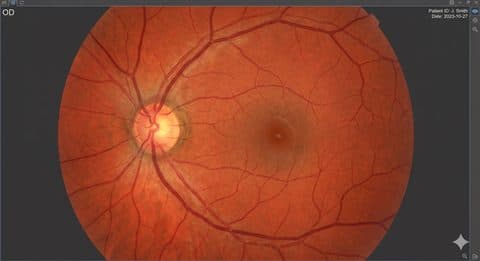
To examine the back of your eye, your optometrist will use an ophthalmoscope or a specialised camera to view the retina, optic nerve, and blood vessels. This is one of the most important parts of the eye test, as it can reveal signs of conditions such as glaucoma, macular degeneration, diabetic retinopathy, hypertensive retinopathy, and even certain types of cancer. The optometrist is literally looking inside your body at the health of your nervous system and circulatory system.
Some practices offer additional imaging technologies such as OCT (optical coherence tomography), which creates detailed cross-sectional images of the retina, or retinal photography, which captures a high-resolution photograph of the back of your eye for comparison at future visits. These tests may incur an additional fee but can provide invaluable baseline data and early detection capabilities.
Step 5: Pressure check and visual fields
Tonometry, or the eye pressure test, measures the intraocular pressure inside your eyes. Elevated eye pressure is one of the key risk factors for glaucoma, a condition that damages the optic nerve and can lead to permanent vision loss if untreated. There are several methods of measuring eye pressure: the most common in UK high-street practices is non-contact tonometry, often called the "puff of air test," which uses a quick burst of air directed at the eye surface to measure resistance.
While the puff of air can be slightly surprising, it is completely painless and takes only a fraction of a second. Some optometrists use contact tonometry instead, where a small probe gently touches the surface of the eye after anaesthetic drops have been applied. This method is generally considered more accurate and is commonly used in hospital eye departments.
A visual field test may also be performed, particularly if you are over 40 or have risk factors for glaucoma. This test maps your peripheral vision by asking you to look at a central point and press a button whenever you notice small lights appearing at different positions around your field of view. It helps detect any blind spots or areas of reduced sensitivity that could indicate early glaucoma or other neurological conditions.
Step 6: Results and recommendations
At the end of the examination, your optometrist will explain the findings in clear, everyday language. They will tell you whether your prescription has changed, discuss any eye health concerns they have identified, and make recommendations about when you should next have your eyes tested. If a new prescription is needed, you will receive a written copy that you are free to take to any optical retailer of your choice.
If your optometrist has detected any abnormalities or conditions that require further investigation, they will explain what they have found and refer you to the appropriate specialist, usually through the Hospital Eye Service. Common reasons for referral include suspected glaucoma, significant cataracts, macular changes, and signs of diabetic eye disease. Receiving a referral is not something to be alarmed about; it simply means that a more detailed assessment is needed, and early referral is always better than late.
A standard NHS-funded eye test typically takes between 20 and 30 minutes. Private or enhanced eye tests, which may include additional imaging, can take 30 to 45 minutes. Either way, the appointment is comprehensive, painless, and one of the most valuable health checks available to you in the UK.
What to do after your eye test
Once your eye test is complete, take a moment to review the written prescription and any advice your optometrist has given you. If you need new glasses, you are not obliged to purchase them from the practice where you had your eye test; your prescription belongs to you, and you can shop around for the best deal. However, many opticians offer package deals or loyalty discounts that can make buying at the same practice competitive.
If your optometrist recommended a follow-up appointment, book it before you leave while the date is fresh in your mind. If you have been referred to the Hospital Eye Service, you should receive a letter with an appointment date within a few weeks. If you do not hear anything within the expected timeframe, contact your optician or GP to chase the referral.
Finally, file your prescription in a safe place and make a note in your diary or phone to book your next eye test when it falls due. Building regular eye tests into your health routine is one of the simplest and most effective ways to protect your vision and monitor your overall health for years to come.